
'/%3E%3C/svg%3E)
COLLAGEN

An Essential Protein at the Core of the Human Body
Collagen is the most abundant protein in the human body. It accounts for nearly 30% of the body's total protein content and is one of the main structural components of the skin, joints, bones, muscles, tendons, ligaments and connective tissues.
A true biological framework, it contributes to the strength, flexibility and proper function of numerous tissues that are essential to our mobility, appearance and quality of life.
A Naturally Declining Production
From around the age of 25, the body's natural collagen production gradually begins to decline. This physiological process accelerates with age and may also be influenced by various factors, including UV exposure, stress, an unbalanced diet, pollution and intense physical activity.
This natural evolution explains the growing interest in collagen among the scientific community and nutrition professionals.
Why Collagen Peptides?
To be used in functional foods and beverages, collagen is hydrolysed into collagen peptides: short chains of proteins obtained through a highly precise process.
Today, this form is widely used in functional nutrition and is the subject of numerous scientific studies, particularly in the fields of skin health, mobility, sport and healthy ageing.
How Do Collagen Peptides Work?
When collagen is hydrolysed, it is broken down into collagen peptides: very small protein chains composed of amino acids, including hydroxyproline, one of their characteristic markers.
After ingestion, these peptides are absorbed by the body and transported through the bloodstream to various tissues. Scientific research shows that they may be involved in biological mechanisms related in particular to the skin, joints, bones and muscles.
This growing understanding of their mechanisms of action has significantly advanced collagen research over recent years.
A Rapidly Evolving Field of Scientific Research
For more than twenty years, collagen peptides have been the subject of an increasing number of scientific studies worldwide. Universities, research centres and industry leaders are working together to better understand their role and develop new applications in the fields of nutrition, health and well-being.
These studies continue to expand scientific knowledge and are paving the way for a new generation of nutritional products based on increasingly precise, targeted and innovative formulations.
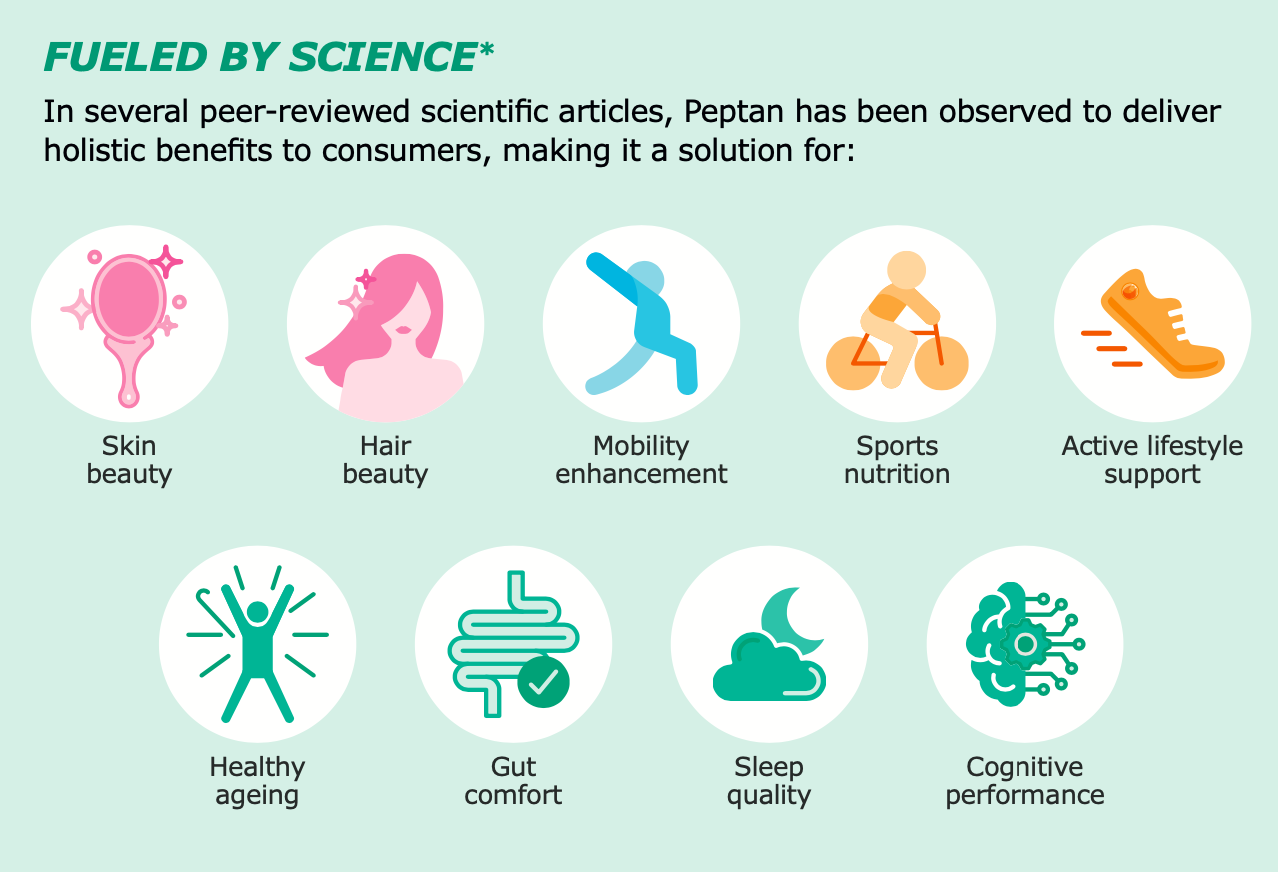
Peptan holistic infographics, provided by Rousselot, p.1
*All references and the full infographic material are available at the www.peptan.com website
For more detailed information, including specific clinical study results, you can visit the Peptan website and download their whitepaper on collagen peptides for skin beauty and hair health (Peptan) (Rousselot).